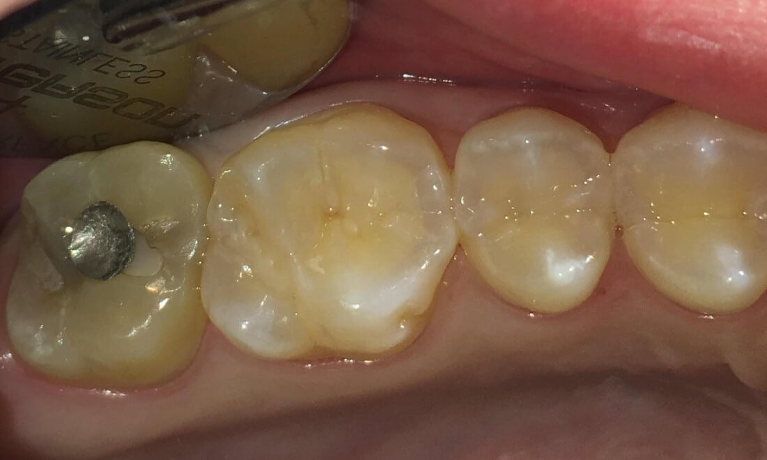
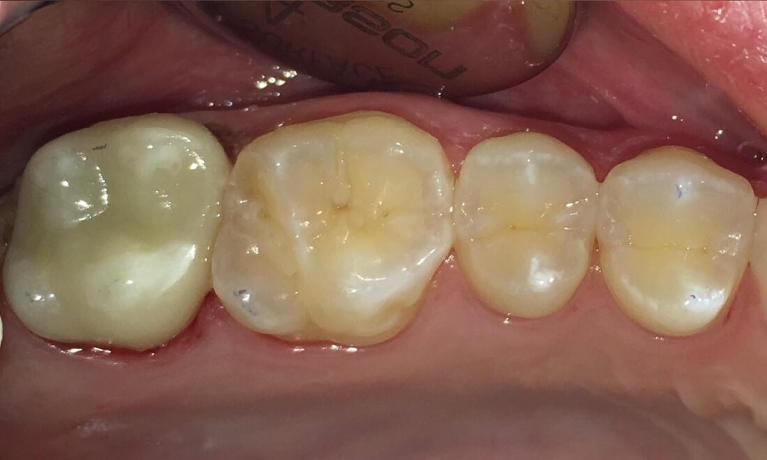
When your tooth suffers trauma or a root infection, it may be vulnerable to breakage, especially when biting down on food. A dental crown in Toronto provides a buffer zone between your bite and natural tooth, allowing you to chew with confidence and not worry about losing your tooth.
In some cases, a tooth-coloured filling is enough to stabilize your tooth after root canal therapy in Toronto. Timely intervention following trauma or a root infection may be the deciding factor. However, your dentist makes the determination based on the integrity of your tooth following root canal therapy in Toronto.
Is a Root Infection a Dental Emergency?
If you call our dental office reporting mild tooth sensitivity, we will work to get you in front of our dentist in Toronto as soon as possible to rule out a root infection. A root infection may not be an emergency in the early stages, but it should still be considered for timely intervention by a dentist.
If you have tooth pain and swelling, we treat this as a dental emergency, and we work hard to see you on the same day you call our dental practice in Etobicoke.
How Can I Avoid Future Root Infections?
The best preventive care calls for a partnership between you and your dentist in Etobicoke. For your part, it is vital to maintain an excellent oral care regimen at home.
Your dentist should also see you twice yearly for a routine exam and x-rays as needed. A thorough dental exam and x-rays help spot potential issues like root infections before they manifest into dental emergencies.
Visiting your dental hygienist every six months for professional teeth cleanings in Toronto is also essential. Your hygienist gently removes the debris that your toothbrush cannot clear away—the bacteria and tartar that lead to cavities and root infections.
You also want to avoid trauma to your teeth, which can lead to root infection. If you participate in sports, make sure you protect your mouth with the proper gear, which may include a mouthguard.
If you have bruxism, it is also essential to ask your dentist in Toronto about a nightguard to prevent nocturnal grinding and clenching. This habit can lead to wear and fractures, allowing bacteria to enter a tooth and cause it to break or develop an infection.

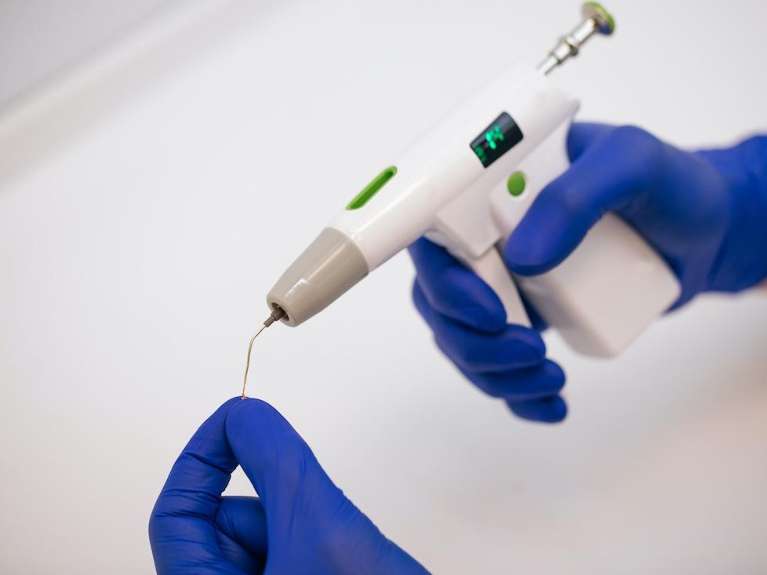
 Nothing strikes fear into patients' hearts more than the words, "you need a root canal". Fortunately, root canal technology has come a long way in recent years, and we offer gentle root canal treatment in Long Branch, Toronto.
 Pain Relief from Infected Tooth
 It is very important to see a dentist when you notice you may have an abscess.
  It is essential to contact a dentist if you notice sudden changes in your oral health. Because different dental issues can mimic one another, a professional assessment is the only way to know for sure if you have a root infection—an infection in the pulp and nerve of your tooth's canal.